For many families in East San Jose, poor air quality is a part of daily life.
Students walk to school beside congested roads. Families live near highways, warehouses, industrial facilities, and other major sources of pollution. During wildfire season, smoke settles over neighborhoods for days at a time. Combined with the effects of fossil fuel burning, industrial emissions, and vehicle exhaust, these conditions create a dangerous cycle of poor air quality that disproportionately harms already underserved communities.
At ConServe, we have seen firsthand how East San Jose experiences significantly worse air quality than many other parts of the city. Yet despite this increased burden, East San Jose has far fewer air-quality monitors and less access to the environmental data needed to protect students and families.
The Growing Air Pollution Crisis
Air pollution is one of the largest public health threats in the world.
Globally, air pollution is responsible for approximately 8.1 million deaths every year, making it one of the leading causes of preventable death. Around 99% of the global population breathes air that exceeds World Health Organization guidelines, and an estimated 1.2 billion workdays are lost annually due to air pollution-related illness.
The pollutants that most heavily affect East San Jose include fine particulate matter (PM2.5), nitrogen dioxide, ozone, and smoke from wildfires.
Fine particulate matter, commonly known as PM2.5, is especially dangerous because these particles are small enough to travel deep into the lungs and even enter the bloodstream. PM2.5 comes from vehicle exhaust, industrial facilities, fossil fuel combustion, construction activity, and wildfire smoke.
Climate change is making the problem even worse. Rising temperatures, drier conditions, and more frequent wildfires are increasing the amount of smoke and particulate matter in the air. Extreme heat can also worsen ozone formation, creating even more dangerous conditions for vulnerable populations.
Why East San Jose Is Disproportionately Affected
Air pollution is not distributed equally.
East San Jose faces a unique combination of geographic, economic, and historical disadvantages that place residents at higher risk.
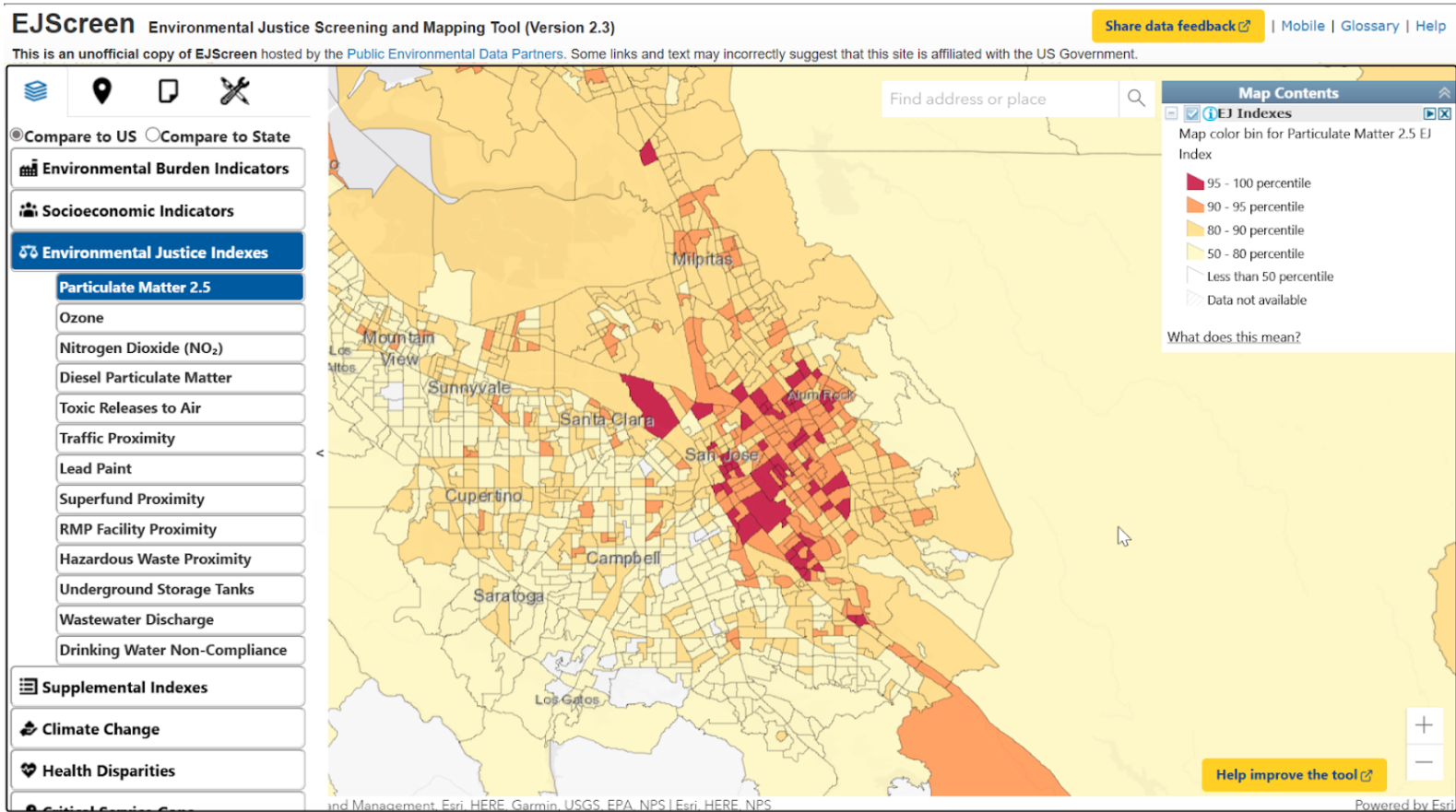
Historically, redlining and discriminatory housing practices concentrated many low-income families and communities of color in neighborhoods closer to highways, industrial facilities, and major traffic corridors. These areas continue to experience higher levels of pollution exposure today.
East San Jose also experiences worse air quality than 53% of cities in California. Because of west-to-east wind patterns across the Santa Clara Valley, particulate matter and other pollutants often accumulate on the eastern side of the valley, where many East San Jose neighborhoods are located.
At the same time, air-quality monitoring infrastructure is significantly sparser in East San Jose compared to wealthier parts of San Jose. In more affluent communities, residents often have access to denser networks of PurpleAir sensors and other monitoring technologies. In East San Jose, many neighborhoods lack the real-time air-quality information needed to make decisions about outdoor activity, school operations, and health precautions.
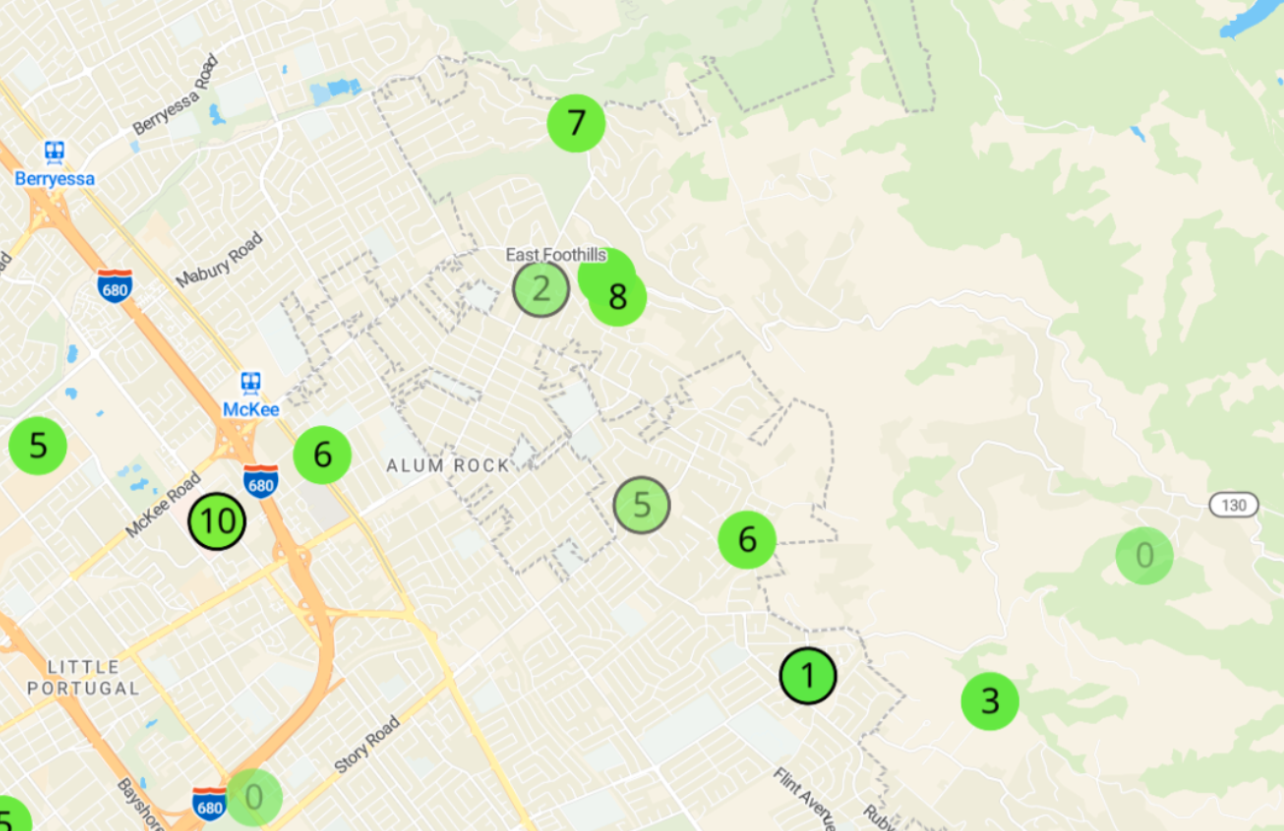
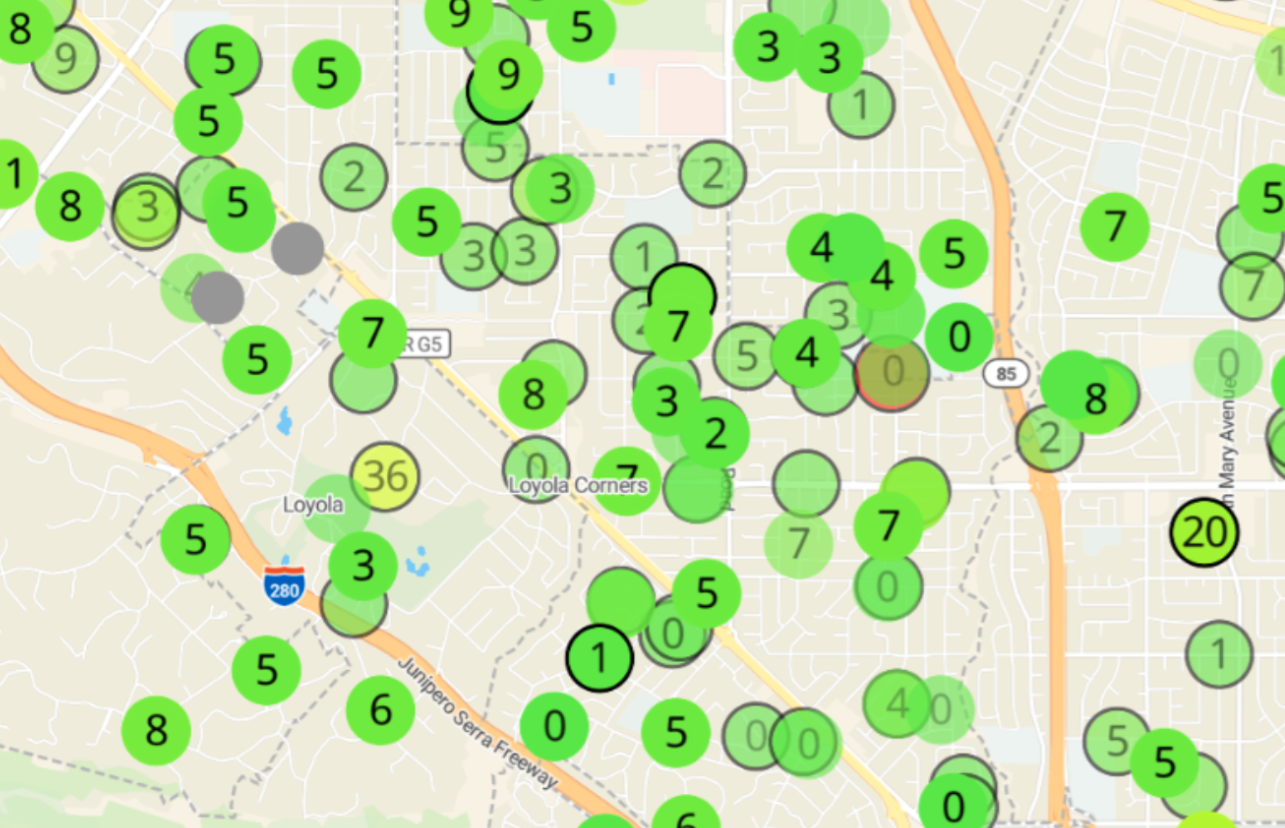
This monitoring gap results in communities with the greatest pollution burden often having the fewest resources to respond.
How Air Pollution Harms Students and Schools
Children are among the most vulnerable to air pollution because their lungs and brains are still developing.
Research shows that chronic exposure to pollutants like PM2.5 and nitrogen dioxide can impair executive function, attention span, and working memory. These effects can reduce students’ ability to focus, learn, and succeed in school.
One Yale study found that long-term exposure to air pollution decreases standardized testing scores. Other research has shown that schools in polluted areas experience higher rates of student absences, teacher absenteeism, and disciplinary issues.
In East San Jose, where more than 80,000 students attend school, these impacts are especially concerning.
Air pollution has been associated with:
- A 5.7% increase in student absences
- A 13.1% increase in teacher absenteeism
- A 28% increase in violent office discipline referrals
- Lower academic performance and reduced concentration
- Increased asthma attacks and respiratory illness
- Long-term lung damage and chronic health problems later in life
Asthma is already one of the most common chronic conditions affecting children, with approximately 1 in 13 children suffering from the disease. Poor air quality can significantly worsen asthma symptoms and increase emergency room visits.
These impacts extend far beyond health. When students miss school, lose instructional time, or struggle to concentrate, it affects graduation outcomes, long-term earning potential, and overall quality of life.
Environmental Inequality in East San Jose
The air pollution crisis in East San Jose is also a story about inequality.
Communities with fewer financial resources often have less political influence, fewer environmental protections, and less access to healthcare. They are also more likely to live near highways, industrial facilities, and other major pollution sources.
This means that families in East San Jose are often exposed to higher pollution levels while also having fewer resources to respond.
For example, purchasing high-quality air purifiers, replacing HVAC filters regularly, accessing healthcare, or staying indoors during smoke events may be much more difficult for low-income families. Schools in underserved areas may also struggle to afford upgraded filtration systems or additional monitoring equipment.
As a result, air pollution reinforces existing inequalities in education, health, and economic opportunity.
Why Better Monitoring Matters
One of the largest challenges in East San Jose is the lack of localized air-quality data.
Many communities rely on a small number of regional monitoring stations that may not accurately capture what conditions look like in specific neighborhoods or at individual schools.
Air pollution can vary dramatically even within a few blocks depending on traffic patterns, industrial activity, weather, and nearby construction.
That is why ConServe works to install low-cost particulate matter sensors in underserved schools across East San Jose.
By providing schools with real-time air-quality data, we help administrators make better decisions about:
- Whether outdoor recess, PE, or sports practices should be moved indoors
- When air filters need replacement
- Which schools are most at risk during wildfire smoke events
- How pollution patterns vary across neighborhoods
- Where additional resources and policy interventions are needed
Our goal is to use the data collected to drive action.
What Needs to Change
Addressing air pollution in East San Jose requires more than just individual behavior changes.
We need stronger investment in environmental justice, cleaner transportation, and community-based monitoring.
Some important steps include:
- Expanding air-quality monitoring infrastructure in East San Jose
- Installing particulate matter sensors at more schools
- Upgrading school HVAC and filtration systems
- Reducing traffic emissions near schools and neighborhoods
- Increasing urban tree canopy coverage
- Strengthening wildfire preparedness and smoke response plans
- Investing in clean transportation and electrification
- Providing underserved communities with more resources to respond to poor air quality
Air pollution is not inevitable. It is the result of policy choices, infrastructure decisions, and unequal investment.
If we want every child in San Jose to have an equal opportunity to learn, grow, and thrive, we must address the environmental conditions that shape their daily lives.
East San Jose deserves clean air, stronger protections, and the tools needed to create healthier schools and communities.
Works Cited
World. (2019, July 30). Air pollution. Who.int; World Health Organization: WHO. https://www.who.int/health-topics/air-pollution#tab=tab_1
Kmansfield. (2025, September 11). What Causes Air Pollution? NASA Science. https://science.nasa.gov/kids/earth/what-causes-air-pollution/
Health Effects Institute. (2024, June 12). State of Global Air Report. Health Effects Institute. https://www.healtheffects.org/announcements/new-state-global-air-report-finds-air-pollution-second-leading-risk-factor-death
“How Does Air Pollution Affect Businesses?” Clean Air Fund, 10 Nov. 2022, www.cleanairfund.org/news-item/how-does-air-pollution-affect-businesses/.
East Foothills, CA wildfire map and climate risk report. (2026). First Street Technology. https://firststreet.org/city/east-foothills-ca/620598_fsid/air
Howey, B. (2022, October 17). Why San Jose air is worse than other cities - San José Spotlight. San José Spotlight. https://sanjosespotlight.com/why-santa-clara-county-san-jose-air-quality-is-worse-than-other-cities-regions-pollution/
US EPA PM2.5 Air Quality Standards Interactive Map by PurpleAir. (2026). PurpleAir; US EPA PM2.5 Air Quality Standards Interactive Map. https://map.purpleair.com/air-quality-standards-us-epa-aqi
East Side Alliance. (2025). East Side Education Foundation. https://www.eastside-fund.org/east_side_alliance
Daily Air Pollution Exposure and Schooling. (2025). NBER. https://www.nber.org/digest/202506/daily-air-pollution-exposure-and-schooling
Frank, C. (2023, November 14). Yale study: Polluted air can negatively impact children’s test scores. Yale School of Public Health. https://ysph.yale.edu/news-article/yale-study-polluted-air-can-negatively-impact-childrens-test-scores/
Why Indoor Air Quality is Important to Schools | US EPA. (2015, October 27). US EPA. https://www.epa.gov/iaq-schools/why-indoor-air-quality-important-schools