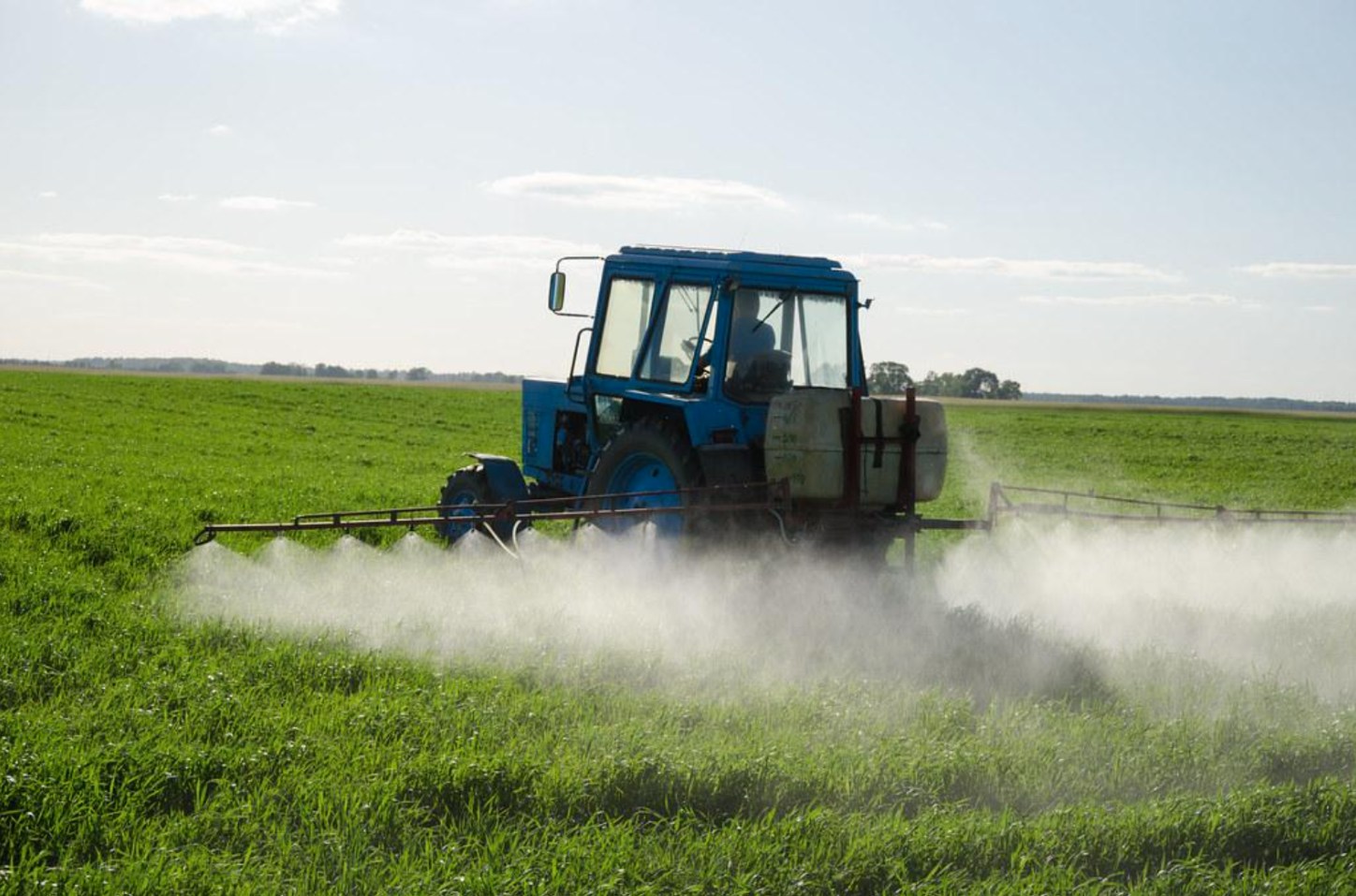
The Pajaro Valley is one of California's most productive agricultural regions, producing more than 2 billion dollars worth of berries each year as part of California's Santa Cruz breadbasket. Unfortunately, it is also one of the most pesticide-intensive regions nationwide. Recent local analyses find hundreds to thousands of pesticide applications within a quarter-mile of area schools and neighborhoods; that means that fields are sitting right up against schoolyards. That proximity poses not only a planning problem but also a biochemical hazard.
So, what's really happening?
Agribusinesses across the Pajaro Valley routinely apply pesticides to protect crops from insects, fungi, and weeds. This practice is theoretically aimed at maximizing yields and minimizing crop loss. However in reality, many of these chemicals are highly toxic and refuse to degrade once released into the environment.
Types of pesticides and concerns:
The main categories of pesticides used near schools and residential areas include:
Chloropicrin — a respiratory and ocular irritant used as a soil fumigant; studies and regulatory assessments show ocular irritation thresholds in the low-hundreds of parts per billion for short exposures (e.g., eye irritation reported at ~100–150 ppb in controlled exposures).
Chloropicrin is strongly irritating and can chemically injure airway and ocular surface cells. Local epithelial necrosis, inflammation, and oxidative stress can impair barrier function and increase susceptibility to infections and chronic airway disease. Acute exposures at tens–hundreds of ppb can produce immediate clinical symptoms in exposed humans.
It causes conjunctival lacrimation, coughing, shortness of breath and can provoke reactive airways dysfunction; repeated or high exposures can damage airway epithelium. Mechanistically, chloropicrin (a highly electrophilic compound) causes mucosal irritation and inflammation and can produce oxidative stress and epithelial injury in the respiratory tract.
3-Dichloropropene (1,3-D) — a soil nematicide used widely in berry and vegetable production.
1,3-D or reactive metabolites can form DNA adducts and produce DNA strand breaks in target organs in rodents. Animal bioassays show tumors in multiple tissues; mechanistic data include mutagenicity assays and DNA fragmentation, supporting a genotoxic component to tumor risk (regulators treat it as a probable human carcinogen).
Regulatory and toxicology reviews classify 1,3-D as a probable/possible carcinogen based on animal tumors and positive genotoxicity signals in some studies. Mechanistic work shows genotoxic activity in some assays (DNA fragmentation, mutagenicity), and regulatory documents treat its tumorigenic effects conservatively because mutagenic pathways remain plausible. Systemic inhalation exposures are therefore concerning in nearby communities
Malathion (and other OPs) inhibit acetylcholinesterase (AChE) — the enzyme that hydrolyzes acetylcholine at synapses.
OPs phosphorylate the serine hydroxyl in AChE's active site. This blocks acetylcholine hydrolysis, persistent cholinergic receptor activation (both muscarinic and nicotinic) and causes autonomic and central nervous system dysfunction. In developing brains, OPs alter neurogenesis, synaptic refinement, and neurotransmitter system maturation, producing lasting cognitive and behavioral deficits even when overt poisoning is not observed.
Irreversible or semi-reversible phosphorylation of AChE causes acetylcholine accumulation and acute cholinergic toxicity (salivation, bronchospasm, miosis, brady/tachycardia, seizures). Importantly, mounting epidemiology and experimental work shows that low-level, chronic prenatal and early-life exposures to organophosphates are associated with neurodevelopmental deficits (lower IQ, attention/behavioral problems), and these effects may occur at exposure levels below those producing overt AChE inhibition. Mechanistically, developmental effects can reflect disruptions to neuronal proliferation, differentiation, axonal growth, synaptogenesis and non-AChE molecular targets (oxidative stress, disruption of intracellular signaling cascades).
Extent of the issue:
One sprayed, these pesticides don't just stay on fields - they drift across communities and stick to everything in their path. Fine particle droplets and high winds can carry large quantities hundreds of meters beyond target fields in the right conditions. Furthermore, fumigants injected into soil can volatilize and form vapors that spread as gases. Under the right conditions, these vapors can travel hundreds kilometers and persist for hours to days.
Why current regulations fail:
California's legislature recognized these dangers and have since passed regulatory reforms that require no high-drift methods (such as airblast, aerial, fumigation, dust, sprinkler) within one-quarter mile of school sites during school hours, which are defined as 6:00 a.m. – 6:00 p.m., Mon–Fri. They also require no fumigant use within 36 hours prior to a school day and growers must also provide annual notification when they use it and the state runs a SprayDays notification system that gives 48-hour notice for fumigants and 24-hour notice for other restricted pesticides.
However, while theoretically sound, these measures fail to overcome many structural issues. Firstly, limiting applications to "after 6 p.m." still sends vapors and fine droplets into neighborhoods where children and adults breathe them overnight and the next day. Fumigant plumes and volatilized residues can persist beyond the 36-hour nominal window in some conditions, and repeated low-level exposures accumulate. Secondly, wind gusts, tarp failures, and application errors can send concentrated plumes into schoolyards even when the application technically complies with the clock-based rule. Monitoring and community incident reports in the Pajaro Valley document acute odor and irritation events despite scheduling compliance. Lastly, the law allows written agreements that can substitute other measures; this creates variability and potential loopholes that may leave communities under-protected. Overall, current measures are ineffective at curbing the effect of these pollutants on our communities.
Corporate silencing:
All of this begs the question, if these harms are so well documented then why are pesticides still being used in mass quantities? In Pajaro, large agribusiness corporations have been documented using financial incentives to suppress community complaints about pesticide exposure. These payments often come in the form of "community benefit" funds, school donations, or settlement offers to families who report health issues such as illness or skin irritation. While presented as goodwill on paper, these backroom arrangements discourage residents from speaking out or filing official complaints in fear of losing "benifits", allowing pesticide use to continue without much pushback. This practice perpetuates a cycle of silence in which economic dependence overrides public health concerns, particularly in low-income, farmworker communities.
Solutions:
The most effective solution is phasing out high-volatility fumigants near schools. This is the simplest protective action as it eliminates the most mobile and toxic uses nearest to the most sensitive receptors. CORA and others argue for organic conversion of fields bordering schools. This eliminates the need for pesticides as organic practitioners use techniques like integrated pest management to minimize the impact of their agricultural production on the environment and nearby communities. This is the best option given that a portion of Pajaro Valley farmland is already organic, indicating that this has already been implemented successfully at little cost to local farmers.
Sign CORA's petition here:
https://farmworkerfamily.org/cora