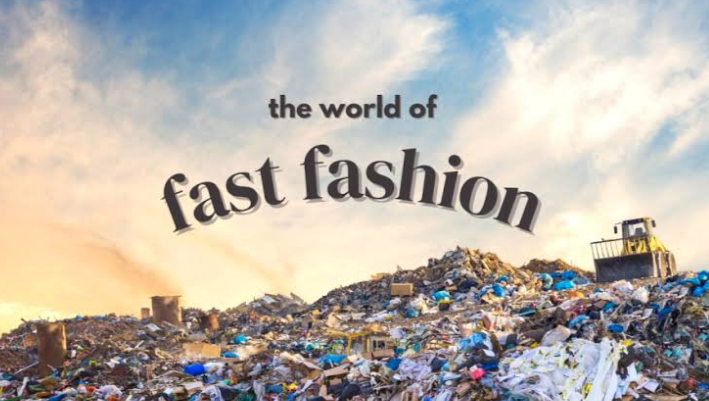
We often talk about fast fashion as an issue of landfill waste or sweatshop labor. And while both are undeniable realities, there is a third, quieter systemic crisis unfolding right on our bodies and in our cities: the thermal and environmental inequality of synthetic clothing.
Fast fashion's disadvantages don't just end at landfill waste or sweatshop labor — it's much more than that. It is petrochemical engineering marketed as convenience. And like most urban environmental problems, these consequences do not land equally.
The Death of Natural Fibers
Walk into any high-street retailer today, and over 60% of the clothing on the racks is made from synthetic polymers — polyester, nylon, acrylic, and elastane.
These aren't textiles in the traditional sense; they are refined crude oil woven into threads. Natural, breathable fibers like organic cotton, linen, and wool have been systematically priced up, transforming temperature-regulating garments into luxury items reserved only for higher income brackets. For the average consumer, synthetic clothing is no longer a choice — it is the default. And who chose that? The Market.
So, everything that makes one's life easier is expensive now. Are we catching the pattern?
Thermal Inequality
This shift from natural to synthetic fabric creates a severe thermal class divide, especially in urban areas already suffering from the Urban Heat Island (UHI) effect.
Polyester and nylon lack breathability and moisture-wicking properties. In high temperatures, synthetic garments trap body heat and sweat against the skin, actively escalating physical heat distress.
Higher-income populations often transition between air-conditioned vehicles, offices, and homes, wearing breathable natural fabrics. Meanwhile, lower-income urban residents — who rely on public transit, walk unshaded streets, or work outdoor or manual jobs — are forced to navigate high-heat environments wrapped in literal plastic.
When urban shade is scarce and your clothes are made of petroleum, navigating a summer day in the city sounds like a terrible experience. Yet guess who goes through it every day? Not the billionaires, definitely.
(Now the market is making you suffer through a physical endurance test every day. Without your permission, by the way. Not that you would give it when asked anyway, but you get the point.)
Washing Plastic into Urban Waterways
If it had stopped at heat alone, it would've been a relief at this point. Unfortunately, it's not that simple. Every time a synthetic garment is washed, it sheds hundreds of thousands of microscopic plastic fibers.
Municipal water treatment plants in major cities were never designed to filter out microfibers at this scale. As a result, millions of tons of synthetic microplastics flow directly from domestic washing machines into local rivers, bays, and urban coastlines.
This creates a localized feedback loop: low-cost synthetic clothing pollutes the exact urban waterways and marine ecosystems that working-class coastal communities rely on for sustenance and recreation.
(So the market and the 'rich' ones decide their comfort and the suffering falls on the working class? Hmm, sounds fair, right?)
The Illusion of Sustainable "Circularity"
When confronted with these realities, fast-fashion companies point to their "sustainable collections" or in-store garment recycling bins. But this is little more than greenwashed consumer sedation.
Less than 1% of discarded clothing is ever recycled back into new garments. The vast majority of collected items are either incinerated or shipped to markets in the Global South, dumping Western urban waste onto developing municipal infrastructures. (This also deserves a blog of its own at this point.)
The recycling bin isn't a solution; it's an incentive to keep buying synthetic plastic under the guise of 'eco-consciousness'.
Beyond the Price Tag
Fashion cannot be separated from environmental classism. When low-income consumers are priced into wearing heat-trapping petroleum products while urban waterways suffer the microplastic fallout, fast fashion ceases to be a mere consumer preference. It is an environmental hazard — woven, packaged, and sold at a discount.
Every human being deserves to have comfortable clothes to wear at the very least. Why has capitalism commodified even the basic requirements industry?
Give people a break, for Merlin's sake.
References
Ellen MacArthur Foundation. (2017). A new textiles economy: Redesigning fashion's future. https://www.ellenmacarthurfoundation.org/a-new-textiles-economy
Bick, R., Halsey, E., & Ekenga, C. C. (2018). The global environmental injustice of fast fashion. Environmental Health, 17, 92. https://doi.org/10.1186/s12940-018-0433-7
Carney Almroth, B. M., Astrom, L., Roslund, S., et al. (2018). Quantifying shedding of synthetic fibers from textiles; a source of microplastics released into the environment. Environmental Science and Pollution Research, 25, 1191-1199. https://doi.org/10.1007/s11356-017-0528-7
Environmental Protection Agency (EPA). (2023). Nondurable goods: Materials, waste and recycling. U.S. EPA Reports. https://www.epa.gov/facts-and-figures-about-materials-waste-and-recycling/nondurable-goods-product-specific-data