Have you ever wondered what happens to your question after you hit "send" on ChatGPT? How can a single prompt travel across the internet, be processed in seconds, and return an answer while billions of people around the world are doing the exact same thing?
That's because your question is routed through vast data centers filled with thousands of powerful servers working around the clock. These facilities store information, perform complex calculations, and keep AI systems running every second of every day. As artificial intelligence becomes a part of daily life, data centers have become one of the fastest growing sources of electricity demand, raising important questions about energy use, water consumption, and sustainability.
How does a Data Center work?
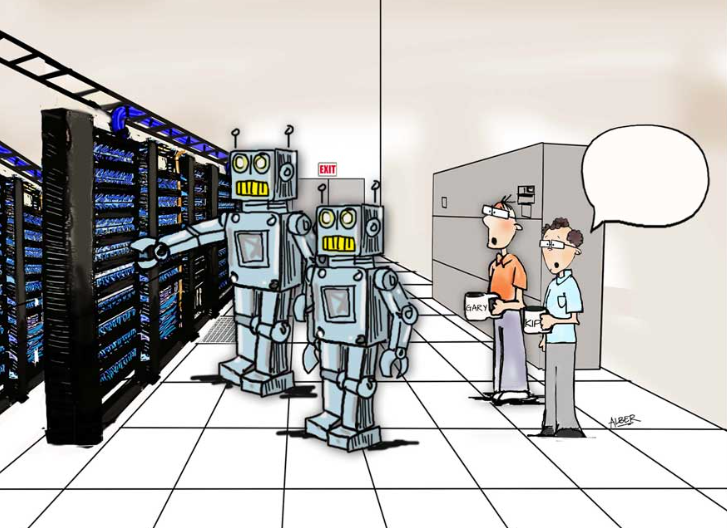
Inside a data center, thousands of servers are connected through high-speed fiber-optic networks to process and store information. AI requests are distributed across clusters of CPUs (Central Processing Units), which handle general-purpose computing and system management, and GPUs (Graphics Processing Units), which contain thousands of smaller processing cores optimized for performing the parallel matrix calculations required by neural networks.
Because these computations consume large amounts of electrical power, servers produce significant heat. Data centers use advanced air or liquid cooling systems to transfer thermal energy away from the hardware and maintain optimal operating temperatures. Redundant power supplies, battery backups, and multiple network pathways are also built into the facility to ensure continuous operation even if individual components fail.
The Environmental Problem
While data centers enable modern technology, they also consume tremendous amounts of resources.
Electricity
Servers operate 24 hours a day, seven days a week. Combined with cooling equipment and networking infrastructure, large facilities can consume as much electricity as a small city. If this electricity comes from fossil fuels, the resulting carbon emissions contribute to the growing issue of climate change.
Water
Many data centers use water-based cooling systems to remove heat from servers. Depending on the climate and cooling technology, a single facility may use millions of gallons of water each day, creating challenges for regions already experiencing drought or water scarcity.
Electronic Waste
Servers typically have operational lifespans of only a few years before being upgraded. Proper recycling and recovery of valuable metals are essential to prevent unnecessary waste and reduce the environmental impact of manufacturing new equipment.
The Growth of Data Centers in our Community
In San Jose, city leaders have proposed attracting more than a dozen new data centers to support the growing demand for artificial intelligence and cloud computing. Supporters argue that these facilities will strengthen the local economy and cement Silicon Valley's position as the center of the AI revolution.
But many residents see a different picture. At recent City Council meetings, community members expressed concerns that these projects could strain the electrical grid, consume large amounts of water, generate noise, and increase greenhouse gas emissions. Environmental researchers have also warned that existing review processes may underestimate the cumulative impact of multiple data centers on regional water supplies.
This debate reflects a larger question facing communities around the world: How do we embrace artificial intelligence while staying committed to environmental sustainability?
Engineering Solutions
Researchers and engineers are developing ways to make data centers more sustainable:
- Using renewable energy sources such as solar and wind power
- Designing more energy-efficient computer chips
- Implementing liquid cooling systems that require less energy than traditional air conditioning
- Recovering waste heat to warm nearby buildings
- Improving AI algorithms so they require fewer computations to achieve the same results
As AI continues to transform our lives in unpredictable ways, we must find ways to support innovation without compromising the sustainability of the communities and planet that support it.
References
Menconi, K. (2026, April 23). Residents push back against San Jose's data center plans. San José Spotlight. https://sanjosespotlight.com/residents-push-back-against-san-joses-data-center-plans
International Energy Agency. (2025). Energy and AI. https://www.iea.org/reports/energy-and-ai
U.S. Environmental Protection Agency. (n.d.). Sustainable management of electronics and batteries. https://www.epa.gov/electronics-batteries-management