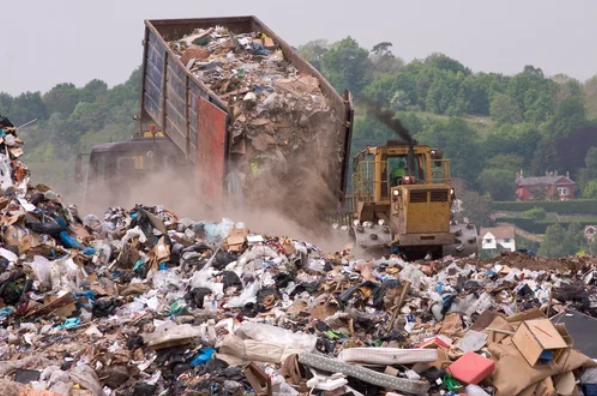
With increasing production and demand, more and more waste is in need of a place to go. This means that waste management facilities, dumping sites, and landfills are popping up and becoming more common around the world.
These waste sites are often expected to manage dangerous products and have been known to cause damage to surrounding areas. But they aren't being put in the middle of nowhere, away from places that could be damaged. Waste sites are disproportionately placed near minority communities, affecting their health and access to safe green spaces.
The Effects of Waste Facilities
There is a high correlation between living near things such as landfills and adverse effects on one's health. Cancer and birth defects are some of the most commonly reported problems in these areas, and though confounding factors can't be excluded as causes, studies indicate real risk for residents near these facilities.
In more than 10 peer-reviewed papers, these residents reported that they also felt excess daily symptoms such as headaches and fatigue.
Waste facilities not only affect health, but also the environment.
Landfills are required by federal legislation to have linings to prevent liquids and chemicals from escaping into the environment. These linings often have leaks that aren't properly taken care of, allowing dangerous materials to make their way into the surrounding environment. This can cause waterways to become polluted, and in some cases it can cause air pollution.
Landfills also create dead spaces where nothing else exists other than trash, a result of substances created by the waste.
In 2019, the Environmental Protection Agency (EPA) recorded violations at 1,900 hazardous waste handling facilities, and this has continued in recent years. When hazardous waste (which includes dangerous chemicals and substances that can be quite harmful) isn't disposed of properly, it causes severe problems.
Similar to the problems around landfills, these dangerous chemicals can make their way into waterways and destroy green spaces. They cause defects in animals; even if chemicals are quickly cleaned up, they can seep deep into the ground and cause disruptions to plant growth for years to come.
These are just some of the side effects of living near waste facilities, and the most unfortunate aspect is that they disproportionately affect those in minority communities.
The Environmental Racism
The main reason why these waste facilities are found disproportionately near minority communities of color is because they often have fewer resources to fight the placement. Residents in traditionally wealthy communities usually find it easier to get legal and societal help to avoid having non-desirable things built near them.
The placement of waste facilities also creates a vicious cycle. Due to systemic racism, people of color are affected by poverty at higher levels. Waste facilities bring down property values, often at extreme levels. Since communities of color face higher poverty, they can be forced into areas where waste facilities have continued to drive prices down. It also makes it harder for them to leave.
In recent times, regulations have been passed to try to relieve this burden placed on minority communities. However, companies have found many workarounds and the inequality has continued.
Combined with the issues that people of color have with the medical community, living near waste facilities creates a very dangerous combination.
A Conclusion and a Message
While waste facilities that are managed incorrectly can cause detrimental effects to the environment and the health of surrounding communities, they are unfortunately still necessary. This is why one of the most important things you can do is try to reduce your waste. As a society, one of the most necessary things we should be doing is trying to reduce the amount of trash we are generating. Simple things such as always using a reusable water bottle can do incredible good.
The next important thing we must do is protect our fellow humans and neighbors. Provide them with the support they need to oppose the placement of these facilities, support research into the ongoing effects of living near them, and keep these effects in mind as you go about life. Our society requires us to work together in order for us all to have the best life.
By working to protect communities in need, we are working to protect not just them, but everyone else as well.
References
Bharath, P. (2025, June 10). Toxic legacies of hazardous waste and the fight for environmental justice. The National Wildlife Federation Blog. https://blog.nwf.org/2025/06/toxic-legacies-of-hazardous-waste-and-the-fight-for-environmental-justice/
Carboni, J. (2024, October 29). Hazardous waste and environmental racism: A toxic legacy of inequality. GPM. https://www.gpm.org/perspectives-feed/hazardous-waste-environmental-racism-toxic-legacy-inequality
Clean Management Environmental Group. (2021, November 12). How improper waste disposal affects the environment. https://cleanmanagement.com/blog/how-improper-waste-disposal-affects-the-environment/
Espinoza, R. (2020, November 24). How hazardous waste disposal affects the environment. IDR Environmental. https://blog.idrenvironmental.com/how-hazardous-waste-disposal-affects-the-environment
Martuzzi, M., Mitis, F., & Forastiere, F. (2010). Inequalities, inequities, environmental justice in waste management and health. The European Journal of Public Health, 20(1), 21-26. https://doi.org/10.1093/eurpub/ckp216
Vasarhelyi, K. (2021, April 15). The hidden damage of landfills. University of Colorado Boulder Environmental Center. https://www.colorado.edu/ecenter/2021/04/15/hidden-damage-landfills
Vrijheid, M. (2000). Health effects of residence near hazardous waste landfill sites: A review of epidemiologic literature. Environmental Health Perspectives, 108(suppl 1), 101-112. https://doi.org/10.1289/ehp.00108s1101
Banner image credit: Bausback, B. (2016, April 27). The 3 most common landfill problems & solutions. HCR LLC. https://www.hcr-llc.com/blog/the-3-most-common-landfill-problems-solutions