100,000. That's how many marine animals die from plastic entanglement each year. Innocent animals out there are dying horrible, painful deaths, all because of OUR actions.
Plastic pollution is a major problem, and is one that affects every living thing, from plants, to animals, to even us humans. And the worst part? The big companies creating items with plastic aren't going to stop. Companies put their profits first, not the health of potentially endangered marine animals. So the production and pollution of plastic will continue on. That is, unless we can stop it.
As consumers, we hold the power. If we demand products that don't contain plastic, companies WILL start creating alternatives. After all, their job is to meet consumer demand. We can help mitigate plastic pollution — that is, if we are willing enough to change.
How much plastic IS there in our lives?
Look around. Your mechanical pencil, your toothbrush, your packaging for just about anything, your containers, your books made with plastic lining, and even your phone are all made of plastic. It is not going to be easy to stop plastic pollution. But it is possible. And we need to act NOW, so the worst scenarios can be avoided (it's possible plastic pollution can lead to the potential extinction of some marine animals).
The book You Can Change the World states that a crucial step to fixing this problem is banning single-use plastic. Single-use plastics are materials made of plastic that can only be used once — think of plastic water bottles, straws, to-go cups . . . etc.
This book indicates that Americans alone waste 38 billion plastic bottles (when stacked, it makes the Eiffel Tower look small!) and 16 billion plastic coffee cups annually (which could go around the Earth's equator almost 3 times)! And where does this waste go? In landfills and in garbage patches in the ocean, where it harms innocent marine life. It is even said that every day we make about 4½ pounds of waste, which, in a year, is enough to fill up a 3-bedroom house!
Of course we can't stop plastic production in one day; it's too unreasonable. But we can stop the use of single-use plastics, because they can often be replaced with better, more eco-friendly alternatives.
Individual actions
Whenever you are buying something at a store, and you see something made of plastic, ask yourself "Do I need it?" We often buy things we don't need, and if these things are made of plastic, you are simply fueling the belief industries have that consumers want things made of plastic. If you do need this item, though, ask yourself "Is there a better alternative?" Oftentimes, you will find a more eco-friendly version of the item you are looking for. For example, consider buying a bamboo toothbrush, a glass or steel container, a reusable steel water bottle, and more. There are better options out there; you just have to look.
If you answer yes to the first question and no to the second, then maybe the item you are searching for really is something important, and can only be made from plastic. Note that plastic can be very useful and sometimes necessary to create certain things — just know that its overuse and excessive manufacturing does have negative consequences. So buy the item, but wherever reasonable, try to make choices that are eco-friendly, because truly: 1 plastic bottle can mean life or death for a baby turtle out there.
Why YOU should care
Remember when I said that plastic affects us too?
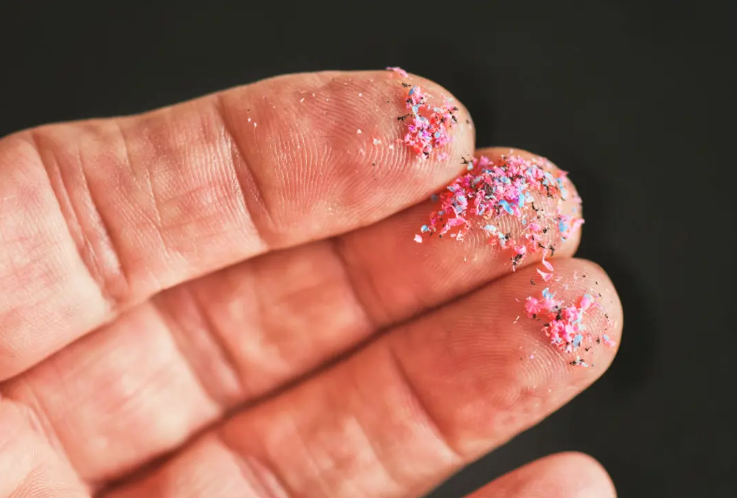
Did you know that you have microplastics INSIDE your body, and some of our food does too (especially seafood)? This occurs because plastic can't fully break down. Plastic, over hundreds and thousands of years, decomposes into microplastics, which are tiny, sometimes even microscopic pieces of plastic that accumulate in the ocean through garbage patches or landfills. From there, it seeps into the ocean, causing microplastics to end up in even the smallest school of fish. And when we eat seafood, it ends up in us and other animals, and soon, entire food chains are affected by plastic!
Research also shows us that for humans, microplastic can also get into our bodies through plastic food packaging (as food — especially hot food — absorbs microplastics) and plastic cups and bottles (we put our mouths to them, and water absorbs microplastics).
Plastic is NOT NATURAL, and it's seriously bad for OUR health — scientific studies show it can lead to different types of cancers, respiratory diseases, high blood pressure, diabetes, digestive and inflammation-related illnesses, chronic stress, and more. But this doesn't have to be our future.
By reducing the amount of plastic we keep around us, and taking action today, YOU have the power to shape the future into a more sustainable and eco-friendly one. The fate of the environment is truly in our hands.
References
Johnstone, J. (1995). You can change the world. Operation Mobilization Literature Ministry.
Shah, S. (2026, May 7). There are microplastics in the air. How worried should you be? TIME. https://time.com/article/2026/05/07/airborne-microplastics-climate-health-impact/
Banner image credit: Peter Dazeley / Getty Images, via TIME ("Scientists continue to study the environmental and health impacts of microplastics.")