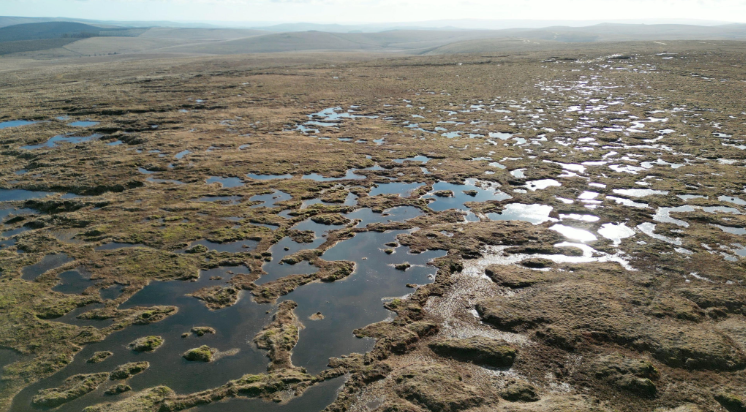
We'll dive into what peatlands are, why they're important, and an innovative restoration technique.
Peatlands: What ARE they?
Peatlands are waterlogged wetlands where dead plant material is not able to fully decay. It accumulates over thousands of years to form thick, carbon-rich layers known as peat.
Why are peatlands important?
Peatlands are important since they can be valuable carbon sinks. In fact, it is said that although they only make up 3% of land, they absorb 30% of the carbon in our atmosphere. However, recently, we've been disrupting these ecosystems, instead causing them to be a major source of emissions.
This means that peatland restoration has become increasingly important in mitigating climate change.
Additionally, peatland restoration also ties into environmental justice greatly. But what exactly IS environmental justice?
According to the Environmental Protection Agency (EPA), environmental justice is described as the "idea that all people and communities have the right to live and thrive in safe, healthy environments with equal environmental protections and meaningful involvement in these actions."
Peatland restoration matters when we talk about environmental justice, since it:
- Protects communities: Reduces flooding, wildfires, and contaminated water, and cuts emissions for everyone (so all communities live in fair temperatures — not too hot)
- Honors Indigenous rights and culture: Integrates Indigenous knowledge and protects traditional lands
One innovative restoration technique
One of the solutions within peatland restoration is paludiculture. This is when people farm on wet peat instead of draining it.
Normally, the ground is wet, which is good since it limits the oxygen that aerobic microbes get, stopping them from breaking down the peat and effectively locking carbon in the soil.
However, traditional farming on peatlands requires draining the water, making the soil dry and likely to burn.
So paludiculture works, since it increases biodiversity (by preserving animals that live in peatland environments), lowers the chances of fires (if the ground is wet it's less flammable), and, perhaps more importantly, still provides farmers with income.
References
Peatlands - A restorable, carbon-rich resource | MN Board of Water and Soil Resources. (2025). https://bwsr.state.mn.us/peatlands
Practical peatland restoration. (n.d.). Ramsar. Retrieved October 4, 2026, from https://www.ramsar.org/sites/default/files/documents/library/bn11_practical_peatland_restoration_e.pdf
van der Meer, P. J., Tata, H., Rachmanadi, D., Arifin, Y. F., Suwarno, A., & van Arensbergen, P. (2021). Developing sustainable and profitable solutions for peatland restoration. IOP Conference Series: Earth and Environmental Science, 914(1), 012032. https://doi.org/10.1088/1755-1315/914/1/012032
Banner image credit: BBC News