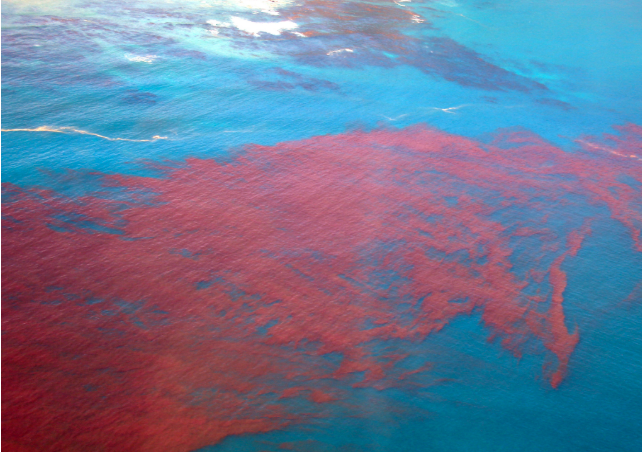
If you live near the coast, there's a chance you've shown up to the beach only to be greeted with the sight of hundreds of dead fish washed ashore, the water a darkly abnormal color.
This event was almost certainly caused by a red tide. While red tides are natural, they're severely exacerbated by human-caused pollution. Consuming fish tainted by a red tide or prolonged contact with the water can be detrimental to our health, so it's time to dive into the causes and effects of red tide.
What is Red Tide?
Red tides are a type of harmful algal bloom (HAB). As their name implies, they cause the water to become a darker, reddish color. They're typically caused when algae species such as Karenia brevis, most common in the U.S., grow into higher-than-normal concentrations. While K. brevis is typically found around Florida and North Carolina's coasts as well as in the Gulf of Mexico, red tides occur around the world.
While red tides are caused by algae, it's important to remember that not all algae is detrimental. Many species have a much-needed place in the environment.
Even a small percentage of these algae blooms can produce dangerous toxins, such as brevetoxins. They kill fish, mammals, birds, and other marine wildlife, often causing them to wash up on the shoreline. If the blooms don't kill fish, they can contaminate them, meaning that if a person were to eat them it could cause health issues like Neurotoxic Shellfish Poisoning. Though fairly uncommon, it causes a litany of issues.
It's also possible for some of these toxins to become airborne when wave action breaks their cells open. Respiratory issues are common after prolonged exposure, and swimming in red tide can cause skin irritation. The issues associated with consuming contaminated fish are relatively well documented, but we are only beginning to understand the full concern of airborne red tide toxins.
Red tide not only affects human health, but also the health of local economies. During red tide events, tourism naturally declines. This is especially detrimental to small businesses. In 2018, an extended event caused Florida to lose roughly 2.7 billion dollars from tourism, a severe increase from the normal loss of over 10 million.
Red Tides and Human Consequences
Red tides have occurred all throughout history. There are records from the 1500s describing what many believe to have been red tide events. They're natural events, but human activities have made them noticeably worse in recent years.
Nutrient pollution is the primary cause of this uptick. While the word "nutrients" often has a positive connotation, it doesn't in this scenario. Most nutrient pollution refers to nitrogen and phosphorus getting added to waterways. This is relevant to red tides because algae (as well as other aquatic plants) require them to grow.
When excess nitrogen and phosphorus make it into the ocean, algae begin growing faster than the rest of the ecosystem can keep up. When it comes to red tide, this means an increased number of events and an increase in severity when they do occur.
One of the leading causes of nutrient pollution is agriculture. The chemical fertilizer and animal manure used in crops have both nitrogen and phosphorus. Rain events wash them into waterways when farms either use too much or don't use them properly.
Phosphorus and nitrogen can also be found in human waste. When the sewer and septic systems used to treat large quantities of waste don't remove elements well enough or don't operate properly, they release the excess nutrients into waterways.
Nitrogen is a byproduct of burning fossil fuels. The combustion of the fossil fuel industry is also a major source of nutrient pollution in the environment.
Many household objects such as soaps are sources too, though they're smaller pollutants compared to those mentioned above.
Nutrient pollution contributes to the pollution of thousands of waterways, causing poor water quality across the U.S. and increasing the number of harmful algal bloom events.
What's Next?
Studies have shown that red tide events have been increasing in number and severity. They cause damage to the local ecosystem, the economy, and human health. Nutrient pollution, a human-driven issue, contributes heavily to the increase in these events.
Red tide events will continue to happen, as they're natural, but there are actions being taken to prevent human activities from making red tides worse. Ongoing advocacy for regulation regarding fertilizer use in commercial agriculture is key for reducing nutrient pollution. Regulations regarding the amount of nitrogen and phosphorus allowed to be present in drinking water are also quite important.
While most key changes to prevent nutrient pollution come with government action, there are simple things you can do to prevent excess nutrients from making their way into local waterways. This is especially important the closer you live to the coast.
Some of the main contributors to nutrient pollution in daily life are soaps and detergents. Try to choose phosphorus-free detergents, and remember to only use the suggested amount. You can try to only run loads of laundry or dishes if the machines are full.
Since wastewater is also a significant polluter, it's crucial to make sure septic tanks are functioning properly. Professionals should perform annual checks on your septic system.
Protecting your own health is also vital. If there's a red tide event occurring in your area, stay away from the ocean and avoid eating shellfish until it's over. Avoid contact with dead fish or other animals that wash ashore.
The red tide has existed for hundreds of years, and probably even longer than that. It will certainly continue to exist, but that doesn't mean it has to continue getting worse.
References
Emergency Medicine Residents' Association, Toxicology Committee Leadership Team. (2021, October 14). Red tides: The phenomenon that will take your breath away. ACEP. https://www.acep.org/toxicology/newsroom/oct2021/red-tides-the-phenomenon-that-will-take-your-breath-away
Florida Fish and Wildlife Conservation Commission. (2022). About red tides in Florida. https://myfwc.com/research/redtide/general/about/
National Ocean Service. (2024, June 16). What is a red tide? NOAA. https://oceanservice.noaa.gov/facts/redtide.html
Red tide algal blooms. (n.d.). Georgia Coastal Health District. Retrieved September 17, 2026, from https://coastalhealthdistrict.org/programs-services/environmental-health-2/harmful_algal_bloom_hab/red-tide-algal-blooms/
Researchers find red tide has become chronic, recurring stressor on Florida's coastal communities. (2026). NCCOS - National Centers for Coastal Ocean Science. https://coastalscience.noaa.gov/news/researchers-find-red-tide-has-become-chronic-recurring-stressor-on-floridas-coastal-communities/
Starmer, A. (2023, December 3). Red tide events in the Gulf of Mexico. Seaside Sustainability. https://www.seasidesustainability.org/post/red-tide-events-in-the-gulf-of-mexico
Turner, E. (2014, January 13). Ocean acidification promotes disruptive and harmful algal blooms on our coasts. NCCOS Coastal Science Website. https://coastalscience.noaa.gov/news/ocean-acidification-promotes-disruptive-and-harmful-algal-blooms-on-our-coasts/
US Department of Commerce, NOAA. (2024). Coastal pollution tutorial: NOAA's National Ocean Service Education. https://oceanservice.noaa.gov/education/tutorial-coastal/harmful-algal-blooms/habs01-sub-02.html
US EPA. (2013, February 21). EPA's ongoing efforts to reduce nutrient pollution. https://www.epa.gov/nutrientpollution/epas-ongoing-efforts-reduce-nutrient-pollution
US EPA. (2013, March 12). What you can do: In your home. https://www.epa.gov/nutrientpollution/what-you-can-do-your-home
What is a red tide? (2025). National Environmental Satellite, Data, and Information Service. https://www.nesdis.noaa.gov/about/k-12-education/oceans-coasts/what-red-tide
Banner image credit: Pierson, D. (2018, May 10). Red tide: Everything you need to know. Surfline. https://www.surfline.com/surf-news/red-tide-everything-need-know/23478