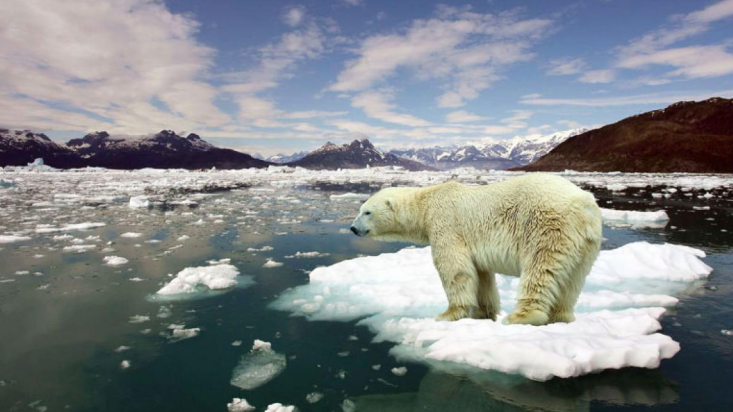
The changing climate and warming temperatures are a source of anxiety for many, the effects growing ever more visible the more time goes on. Things are undeniably getting worse: winters are growing shorter and warmer, the ocean is rising and growing more acidic, and climate-caused disasters are becoming commonplace.
Some days you might wake up and feel like the apocalypse is coming, so the real question becomes: what is actually being done to stop climate change?
Science
As of now, it's not a viable idea to flat-out stop climate change. After all, the climate does change naturally on its own, though we have increased it to the point where the numbers aren't easily comparable.
In order to avoid the worst outcomes, the world needs to reach net zero carbon emissions soon. Unfortunately, this is difficult, mostly due to climate denial in the public and business worlds. We have much of the basic technology to do this, and one of the main goals in climate science right now is improving this technology so that it is far more economically viable than things like oil.
Reaching net zero will take us a while, and it will require the public to accept the truth of the climate. It will also require overhauls of many different systems, but science is working to make that easier. Scientists are improving renewable energy sources like wind energy and solar power. They're creating vehicles of all kinds that can use electricity, phasing out as many different things that require high emissions as possible.
They are also working to figure out the best ways to actively suck CO2 out of the air. Restoring forests and planting new forests is one way, but they're also developing technology that can do this on its own.
While science is potentially the most important aspect of preventing the worst possible climate, it cannot succeed without help from the government and the public. They need support, funding, and they need to be believed.
Legislation
Countries around the world have varying levels of climate legislation. Most of it is aimed at forcing companies to reduce their pollution or setting goals for lowering the country's emissions.
Legislation might seem like empty words and promises, but it has caused noticeable change around the world. With purposely designed laws, countries and cities can usually reduce their emissions very quickly.
For example, Lima, Peru has some of the worst traffic in the world. In 2010, they passed legislation aimed at improving conditions for cyclists, and while it didn't occur immediately, the COVID-19 pandemic encouraged them to actually set it into action. Over the course of a little more than a year, the number of cyclists almost doubled, reducing the traffic and emissions of the city.
Buildings and appliances consume 30% of global energy, and in Colombia, a green building code was enacted in 2015 (see our sustainable architecture blog post for more information) introducing tax incentives to follow it. Thanks to this, many of the new buildings in the country are now more sustainably built.
These are just two of many examples of legislation actually causing significant change. The more legislation is enacted, the more good it does. This is one of many reasons why voting for climate-conscious candidates in local, federal, and presidential elections matters.
The Public
It's hard to be willing to give something up to help stop climate change. You might feel like it shouldn't be your responsibility to change your life because of mistakes being made and wrongs being done by larger companies.
And it's true that it shouldn't be the public's responsibility to stop this, but the unfortunate truth is that it is. To stop the people who have continued to knowingly degrade the climate, we have to show them that we don't think it's okay. We have to show them that the real advances come with being friendly to the environment.
While science works on a way to stop climate change, we have to be the ones to give them time. They need to be able to focus on the right things, and to help them do that, we need to reduce the stress on the climate. Below you will find a list of easy ways to reduce your carbon footprint. You don't necessarily have to do all of them (but if you can, absolutely do!); even just doing a few will help more than you think.
- Ditch fast fashion. It accounts for a surprising proportion of emissions and often ends up in landfills.
- On a similar note, use services like Amazon as little as you possibly can. It may seem convenient, but it has an extremely high emission rate.
- Avoid seafood! When it comes to the U.S., most of our seafood is imported (with high emissions) and it's common for non-sustainable practices to be used when fishing.
- Avoid beef, as well. You've probably heard about this, but beef is one of the most unsustainable products there is. If it's possible for you to avoid meat in general, do that, but if you can't, you can also do things like have one day a week where you don't eat meat (I promise that meat substitutes aren't as bad as people say).
- Avoid food waste, and compost any that you can!
- Switch your appliances to be energy-efficient (depending on where you are, there are certifications they can receive).
- Use LED light bulbs to reduce your energy usage. Turn off all non-essential lights at night.
- If it is safe for you, use less heating and cooling in your home.
- Contact your energy company to see if you can switch to more renewable sources.
- You can also install solar panels on your roof. This will also save you money in the long run!
- Walk, bike, or take public transit where you can! Walking and biking are also very good for your health!
- Reduce, reuse, and recycle electronics, plastics, papers, and clothes.
- Plant native species on your property and replace any non-native species you already have.
These are just some of the many ways you can reduce your carbon footprint. If there's something in your life you think is very unsustainable, there's a high chance you can fix it.
Everyone has the ability to help save the climate, whether they're a scientist, legislator, or just a student who sees a problem. You can go out and advocate for climate policies, or simple changes in your local community. But remember, we all have to pitch in to save the climate.
References
Cho, R. (2018, December 27). The 35 easiest ways to reduce your carbon footprint. Columbia Climate School, State of the Planet. https://news.climate.columbia.edu/2018/12/27/35-ways-reduce-carbon-footprint/
MIT. (n.d.). What can be done about climate change. MIT Climate Portal. Retrieved October 24, 2026, from https://climate.mit.edu/what-can-be-done-about-climate-change
The World Bank. (2023, September 19). Reality check: Lessons from 25 policies advancing a low-carbon future. https://www.worldbank.org/en/news/feature/2023/09/19/climate-policies-with-real-world-results
Union of Concerned Scientists. (2016). Climate solutions. https://www.ucs.org/climate/solutions
United Nations. (n.d.). Actions for a healthy planet. Retrieved October 24, 2026, from https://www.un.org/en/actnow/ten-actions
Banner image credit: Smith, J. (2013, February 13). Understanding climate change (or not). Wisconsin Academy of Sciences, Arts and Letters. https://www.wisconsinacademy.org/magazine/understanding-climate-change-or-not